Quality assurance
Sterility and Endotoxin Testing
Updated 2026-05-25
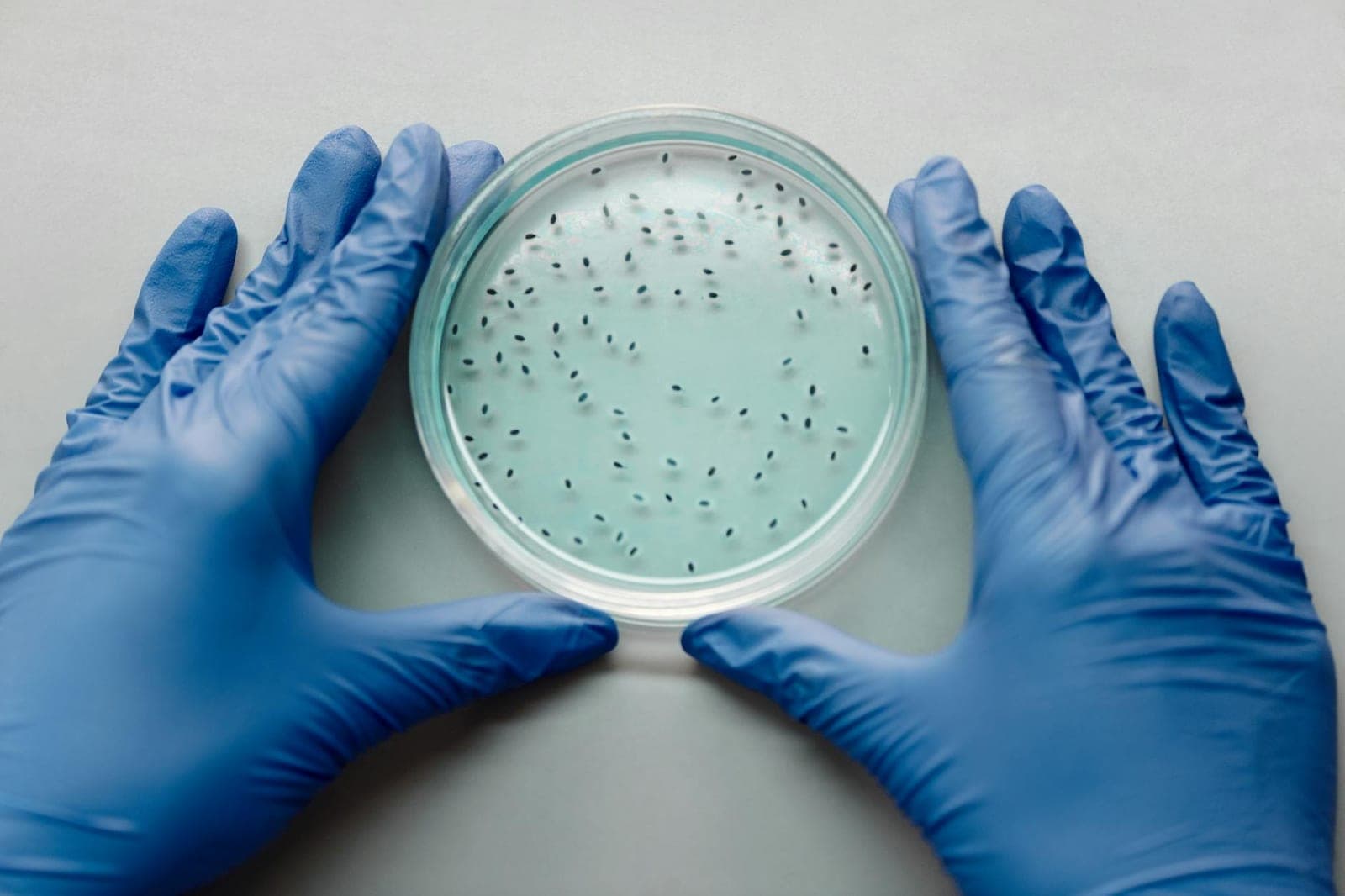
Sterility and endotoxin are two separate quality questions that are easy to conflate. Both can appear on research-material documentation, and both describe the preparation — not how a material may be used.
Sterility: are viable microbes present?
A sterility assay (the compendial reference is USP <71>) asks whether viable microorganisms can be cultured from a sample. "Sterile" means none were detected under the test conditions. Sterility testing has well-known limitations: it samples a portion of a lot, so it reduces but never eliminates uncertainty.
Endotoxin: is bacterial residue present?
Endotoxins are heat-stable fragments of the outer membrane of Gram-negative bacteria. A material can be sterile (no living organisms) yet still contain endotoxin (residue left behind). The bacterial endotoxins test (USP <85>), often an LAL-based assay, quantifies that residue, typically in endotoxin units (EU).
How this shows up on a COA
- A line item for sterility with a pass/fail result and the method.
- A separate endotoxin result with a measured value and unit.
- The lot the tests were run against.
Because these are distinct assays, a thorough vendor reports them separately. Seeing one does not imply the other. As always, these results describe the research material itself and are not instructions for any use.
References
Peptidology is US-operated; guides may emphasize FDA context — local rules differ. Regulatory status varies by country; you are responsible for compliance where you live.